School Goal One
Promote mental health and well-being through Social Emotional Learning and trauma informed practice.
In what ways might a whole-school emphasis on the explicit instruction of core human skills—such as selfawareness, emotional regulation, relationship-building, and problem-solving—enhance students’ socialemotional well-being?
Through ongoing observation and collaboration, our staff have noted that many students are benefiting from direct teaching of social and emotional skills. This intentional focus has fostered a noticeable increase in students’ willingness to take risks and try new things in their learning. Over the course of our 2023–25 work, students are demonstrating greater resilience, confidence, and engagement, which is contributing to more consistent success across learning environments. These outcomes affirm the importance of continuing to prioritize social-emotional development as a foundational element of our school goals.
This goal and driving inquiry aligns to both our Mental Health and Well Being and Indigenous Learner Success district strategic goals and First Peoples Principles of Learning.

First Peoples Principles of Learning

The Mental Health and Well-Being Goal needs to ensure that:
- Learning ultimately supports the well-being of the self, the family, the community, the land, the spirits, and the ancestors.
- Learning is holistic, reflexive, reflective, experiential, and relational (focused on connectedness, on reciprocal relationships, and a sense of place).
- Learning is embedded in memory, history, and story.
Over the course of the year, the following will be our direct areas of focus:
- Continue capacity building and training for staff;
- Continue to incorporate best practices and strategies that support social emotional learning;
- Participate in a school-wide pilot curriculum to provide common language and skill building across the grade levels;
- Offer explicit teaching of skills in a structured curriculum that includes classroom activities, reinforcement of skills through assemblies, weekly reminders, and student announcements;
- Find opportunities to share with families the skill building focus to apply in the home setting;
- Teacher book club - Kids These Days by Jody Carrington;
- Collect baseline data - Record base line of current levels of emotional regulation, problem solving, collaboration and growth mindset - Parent, Staff, Student surveys;
- Alignment with evidence based research, current resources and Trauma Informed practice; and
- Incorporate W̱ SÁNEĆ cultural traditions that strengthen mental wellness.


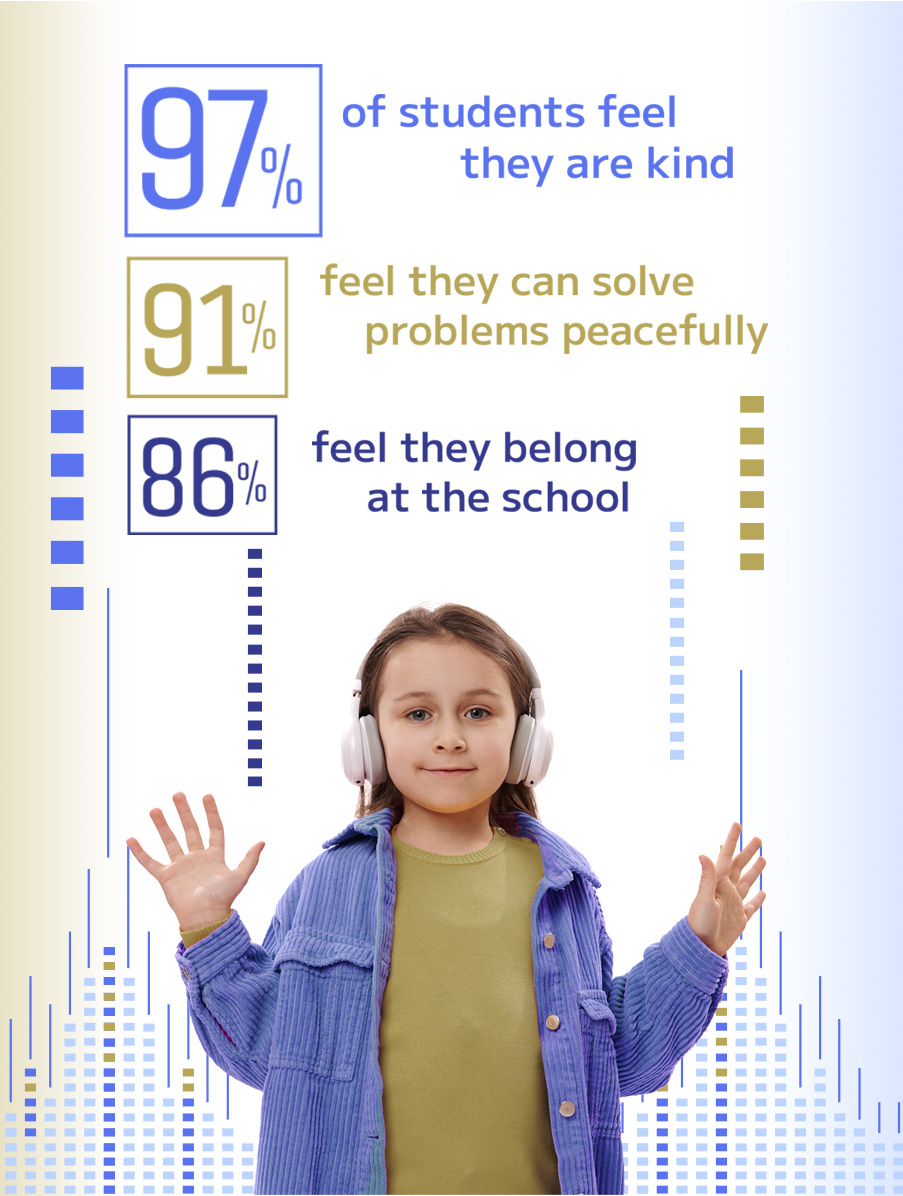
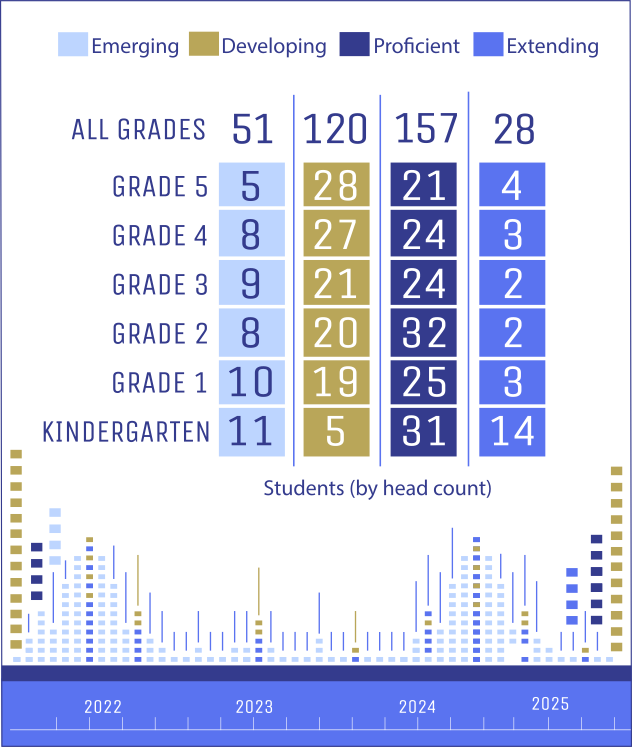
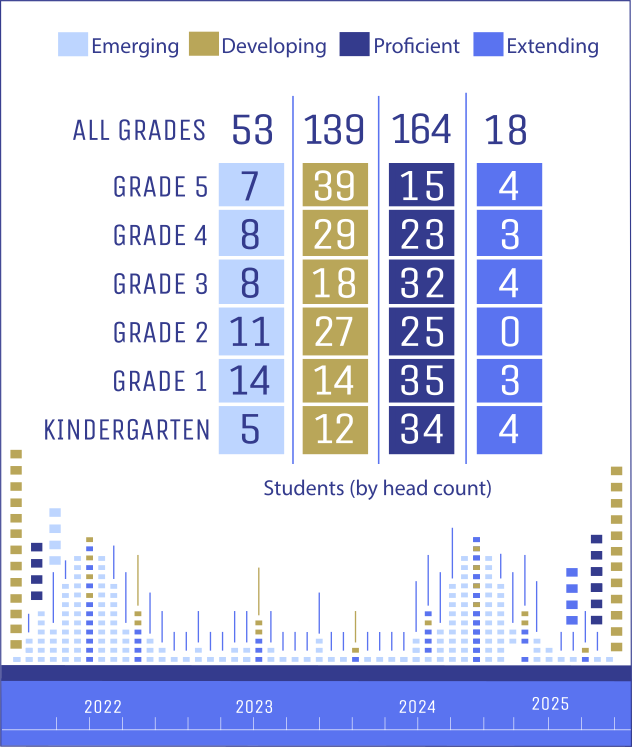
- SEL surveys by staff from 2023–25 show that students have responded positively to strategies promoting growth mindset and risk-taking.
- Student voice and classroom observations show that learners are increasingly willing to try hard things and take risks in their learning.
- Staff have identified a need for a more consistent, school-wide approach to social problem-solving and emotional regulation, suggesting that common language and shared strategies could further support student development.
Over the 2025-26 year, we will track progress on our initiatives identified in this year’s plan. And, specifically:
- Class profile meeting - bi-annual review of academic and SEL strengths and stretches with Inclusion support team (IST, counselor, admin, ELS, SLP, Psychologist, Literacy intervention) to guide term to term interventions in the area of SEL and support using the 3 tiers of intervention model and track and adjust over the year;
- Compare data in skills in survey taken in Nov 2025 to May 2026 for Grades 3-5;
- Check in with staff each term on whole school focus;
- Maintain synchronized delivery of evidence-based curriculum to allow for school-wide consistency in common language and expectations across the grades from Nov – May; and
- Monitor progress of student growth through tools offered in Second Step resource for consistency and growth comparison.
Summary learning, based on evidence gathered over the year, will provide us with key learnings to guide next steps for the 2025-26 school year and beyond.